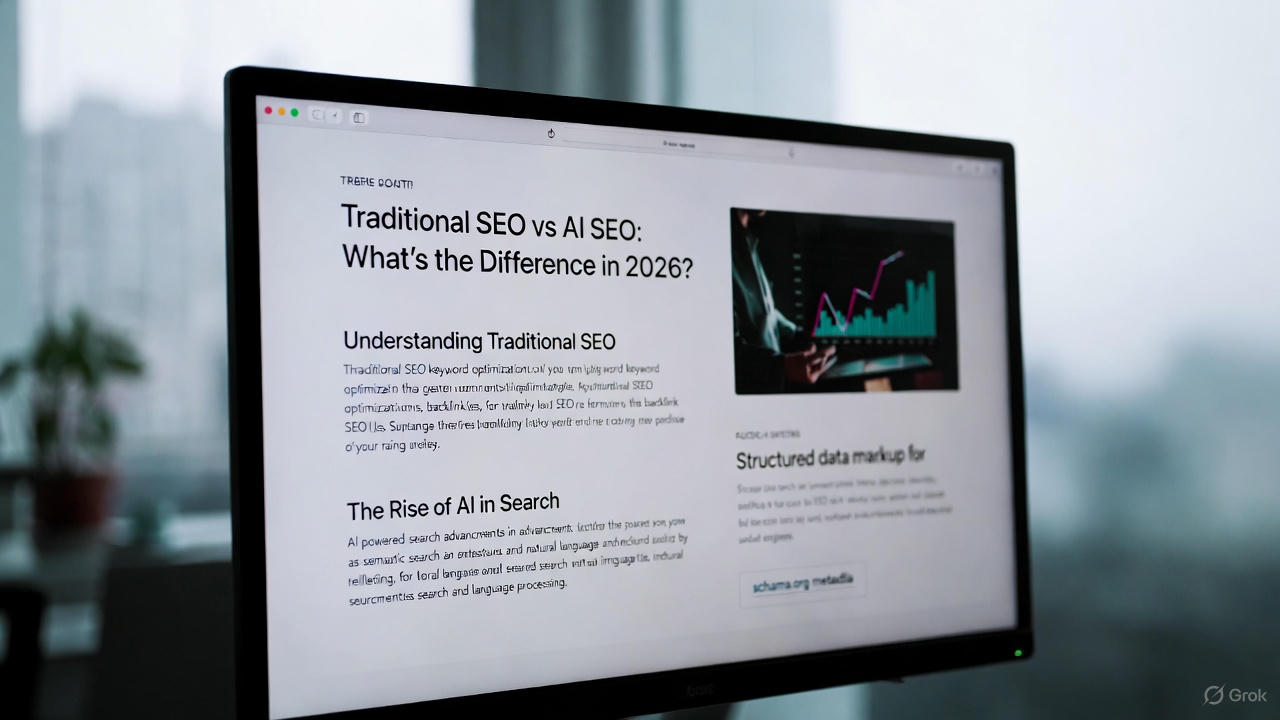
Search engine optimization has evolved significantly over the years. As now we have entered 2026, the digital landscape includes both traditional SEO ( Search Engine Optimization) practices and newer approaches influenced by artificial intelligence AI i.e AIO ( Answer engine Optimization) . Many SEO professionals now refer to AI-driven strategies as AI SEO, Generative Engine Optimization (GEO), or Answer Engine Optimization (AEO). Hee in this blog we will explains the key differences, highlights current seo trends, and offers a practical guidance for businesseses SEO.
Traditional SEO ( Search Engine Optimization)focuses on improving a website’s visibility in search engine results pages (SERPs), primarily on platforms like Google. The main goal is to drive organic traffic by ranking higher in the list of blue links.
Core elements include:
Success metrics center on keyword rankings, click-through rates (CTR), organic traffic volume, and conversions from visitors who click through to the site.
This approach has proven effective for decades. It relies on understanding search engine algorithms and creating content that matches user queries while earning links naturally.
AI SEO, often called GEO or AEO, optimizes content for AI-powered search experiences. These include Google’s AI Overviews, ChatGPT responses, Perplexity answers, and similar tools that generate direct summaries or answers.
The primary objective shifts from driving clicks to being cited or featured in AI-generated responses. Users increasingly receive complete answers without visiting websites, leading to “zero-click” searches.
Key focuses include:
Metrics evolve to include AI visibility—how often a brand appears in AI summaries—alongside traditional traffic data.
While the two strategies overlap, several distinctions stand out in 2026:
Data from 2025 shows AI search growing rapidly, with AI traffic up over 500% in some areas. However, traditional Google searches remain dominant at around 90% market share. Experts predict AI could handle 25% of queries by year-end, but it supplements rather than replaces classic search.
Industries like education, health, and science face greater AI Overview impact, while e-commerce and local searches see less disruption due to existing features like ads and maps.
Brands succeeding today combine both: foundational SEO ( Search Engine Optimization) for indexing and ranking, plus AI optimizations for citations. User-generated content, multimedia (e.g., videos), and real-world trust signals gain importance as AI prioritizes authentic sources.
Neither approach stands alone—most experts advocate integration:
In 2026, effective optimization means appearing where users seek information—whether in link lists or AI summaries. Businesses that adapt to both will maintain visibility and trust in an evolving search ecosystem.
This balanced strategy positions organizations for sustained growth amid ongoing changes.
Elevate your online presence with Conversion Seed trusted Digital Matketing strategies and solutions.