What is GPT?
GPT, or Generative Pre-trained Transformer, is like that incredibly smart friend who can chat about anything, write a story on the spot, or even help with homework. Developed mainly by OpenAI, it’s a type of AI model that’s changing how we interact with technology. But let’s break it down in a more digestible way—here’s what you need to know about GPT in listicle style:
- The Basics: At its heart, GPT is a large language model (LLM) built on deep learning. It predicts the next word in a sentence based on patterns learned from massive datasets, making it feel almost human in conversations.
- How It Started: The journey kicked off in 2018 with GPT-1, a model with 117 million parameters. It was basic but showed promise in generating text using transformer architecture, which focuses on attention mechanisms to understand word relationships.
- Evolution Through Versions:
- GPT-2 (2019): Upped the ante to 1.5 billion parameters, capable of writing essays or news articles. OpenAI held back the full release initially due to misuse fears—it was that powerful.
- GPT-3 (2020): A game-changer with 175 billion parameters. It could compose poetry, code, or simulate dialogues, powering tools like ChatGPT.
- GPT-4 (2023): Added multimodal features, handling images and text together—for example, describing a photo or creating code from a sketch.
- GPT-5 (2025): Released in August with PhD-level reasoning and huge context windows (up to 272,000 tokens). It tackles complex, multi-step problems with fewer errors.
- Recent Updates:
- GPT-5.1 (November 2025): Focused on efficiency for long tasks, making it more stable.
- GPT-5.2 (December 2025): Boosted performance in benchmarks, excelling in professional tasks and long-context understanding.
- What Makes It Tick: Pre-training on internet-scale data teaches it language patterns, followed by fine-tuning for specific uses. It’s statistical magic, not true comprehension, but the results are uncanny—like having a conversation with someone who’s read every book ever written.
- Flaws to Note: Biases from training data can creep in, and it sometimes “hallucinates” facts. But ongoing tweaks are making it more reliable.
Interacting with GPT feels personal, almost like brainstorming with a colleague over coffee. It’s not just tech; it’s a tool that makes complex ideas accessible to everyone.
The Impact of GPT
GPT isn’t just a buzzword—it’s reshaping our world in ways both exciting and challenging. Picture it as a ripple in a pond, spreading out to touch economies, societies, and daily routines. To humanize this, think of how it’s like that helpful neighbor who’s always there to lend a hand. Here’s a listicle breakdown of its key impacts:
- Economic Boosts:
- Productivity Surge: Studies from 2023 projected generative AI adding $2.6–$4.4 trillion to the global economy yearly by automating tasks.
- Business Edge: By 2026, firms see 40% efficiency gains in areas like report drafting or data analysis. Small entrepreneurs now craft pro-level marketing without big budgets.
- Social Shifts:
- Education Revolution: Personalized tutoring helps students learn at their own pace, making tough subjects feel approachable.
- Job Dynamics: Automation hits writing, coding, and support roles, but sparks new jobs in AI ethics and prompt engineering—it’s about adaptation, not replacement.
- Ethical Considerations:
- Bias and Misinfo: Models like GPT-5 cut down on agreeable fluff or fabrications, but inherited data biases remain a hurdle.
- Healthcare Help with Caution: Aids in diagnostics, yet over-reliance without human checks could be risky—like trusting a map without verifying the path.
- Environmental Angle: Training eats up energy equivalent to thousands of homes, pushing for greener AI practices.
- Cultural Influence:
- Creativity Catalyst: Artists brainstorm with it, writers beat blocks—it’s like a co-creator adding fresh perspectives.
- Global Connectivity: Makes tech feel more human, turning abstract ideas into relatable stories or viral content.
In essence, GPT’s impact is like a double-edged sword: immense power for good, balanced by the need for thoughtful use. It’s empowering us to dream bigger, but reminds us to stay grounded.
GPT in Content Creation
Content creation used to feel like a solo marathon, but GPT turns it into a team sprint. It’s that reliable partner who brainstorms ideas while you sip coffee. To make this relatable, let’s list out how GPT supercharges this field:
- Idea Generation:
- Outlines and Headlines: Feed it a topic, and it spits out structured plans or catchy titles, saving precious time.
- SEO Magic: Suggests keywords and optimizes for search, helping content rank higher without the guesswork.
- Drafting and Editing:
- Initial Writes: Creates full drafts—from blog posts to scripts—that you can tweak for your voice.
- Human Touch Addition: Varies sentence lengths, adds anecdotes, making text feel warm and engaging, not robotic.
- Marketing Applications:
- Personalized Campaigns: Analyzes data to tailor emails or social posts, boosting engagement—reports show 25% higher conversions in e-commerce.
- Ad Copy Automation: Integrates with tools for quick, agile content that adapts to trends.
- Creative Sparks:
- For Writers and Journalists: Plots stories, summarizes sources, or fact-checks, like a digital muse.
- Visual Integration: With multimodal versions, generates ideas from images, enhancing multimedia content.
- Challenges and Tips:
- Originality Risks: Always edit to avoid plagiarism—GPT provides the frame, you add the art.
- Ethical Use: Focus on collaboration, not replacement, to keep content authentic.
GPT makes creation feel less daunting, more fun—like turning a blank page into a canvas of possibilities.
GPT in Customer Service Automation
Imagine customer service as a friendly chat over the fence, not a frustrating wait on hold. GPT makes that possible by automating with empathy. Here’s a listicle of how it’s transforming this space:
- Core Strengths:
- Natural Conversations: Understands context, slang, and emotions, delivering responses that feel personal.
- Quick Resolutions: Handles queries like returns or recommendations in e-commerce, cutting wait times.
- Efficiency Gains:
- High Volume Handling: By 2026, companies manage 60% of interactions via AI, freeing humans for tricky cases.
- CRM Integration: Recalls past chats for seamless, personalized service—like remembering your usual order.
- Humanizing Features:
- Empathy Built-In: Apologizes for issues or adds humor, building trust and loyalty.
- Multilingual Support: Switches languages on the fly, making global service effortless.
- Hybrid Approach:
- AI First, Human Backup: Escalates complex or sensitive queries, ensuring reliability.
- Proactive Help: Anticipates needs, like suggesting fixes before problems escalate.
- Potential Pitfalls:
- Ambiguity Struggles: Not ideal for high-stakes like medical advice—always pair with oversight.
GPT turns service from a chore into a delight, making customers feel valued, not just processed.
GPT in Language Translation
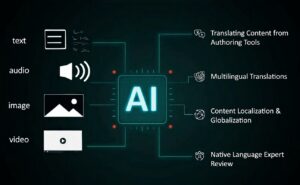
Language barriers? GPT’s knocking them down like a helpful interpreter at a global party. It goes beyond literal words to capture nuance. Let’s list the ways it’s revolutionizing translation:
- Accuracy and Context:
- Nuance Capture: Preserves idioms, humor, or tone—e.g., a joke stays funny across languages.
- Multimodal Magic: Translates text in images, like signs or menus, for real-world use.
- Business Benefits:
- Real-Time Collaboration: Enables borderless teams, with tools like Microsoft Translator.
- Cost Savings: 2025 studies show 50% reduced costs and 95% accuracy for common languages.
- Creative and Everyday Uses:
- Literary Aid: Suggests poetic equivalents, helping translators refine work.
- Travel Perks: Instant voice translations make interactions natural and fun.
- Limitations to Consider:
- Rare Languages: Data scarcity affects quality for less common dialects.
- Sensitive Contexts: Caution in diplomacy or legal docs to avoid missteps.
GPT makes the world feel closer, turning “lost in translation” into “found in connection.”
GPT’s Future Development
Looking ahead, GPT’s path is like an adventure novel—full of twists and promise. With OpenAI eyeing $30 billion in revenue, investments are pouring in. Here’s a listicle peek at what’s coming:
- Tech Advancements:
- Bigger Contexts: Models with millions of tokens to handle vast data, like entire databases.
- Deeper Reasoning: Building on GPT-5.2 for autonomous planning and real-world agency.
- Integration Expansions:
- Robotics and IoT: Smart homes where GPT predicts and acts on needs intuitively.
- Open-Source Growth: Initiatives like gpt-oss to spark widespread innovation.
- Sustainability Focus:
- Efficient Training: Methods to cut energy use, making AI greener.
- Human-Centric Evolutions:
- Emotional Mimicry: Better at ethics and empathy, feeling more like a true companion.
- Regulatory Balance: Addressing biases to ensure fair, responsible growth.
The future? GPT amplifying our strengths, making life smarter and more collaborative.
Conclusion
To wrap this up, GPT is more than code—it’s a bridge to smarter living. From its roots to future horizons, it’s impacting creation, service, translation, and beyond. Let’s embrace it wisely, like a trusted tool in our toolkit. In this AI age, the real win is how it helps us connect and create together.