If you own a business website, you have probably heard people talking about SEO. Some agencies promise “top rankings,” while others talk about traffic, leads, and visibility. But before any SEO campaign starts, one important step comes first — an SEO audit.
In 2026, SEO is more advanced than ever. Google now focuses heavily on user experience, AI-generated search results, website performance, trust signals, and content quality. Because of this, businesses need professional SEO audits to understand what is helping or hurting their rankings.
One of the most common questions business owners ask is:
How much does an SEO audit cost in 2026?
The answer depends on many factors, including website size, competition, technical complexity, and business goals. In this detailed guide by Conversion Seed, we will explain SEO in simple language, what an SEO audit includes, why it matters, and how much businesses can expect to pay in 2026.
What Is SEO?
SEO stands for Search Engine Optimization. It is the process of improving your website so that it appears higher on Google and other search engines when people search for products or services related to your business.
For example:
Google shows websites it believes are the most useful, trustworthy, and relevant.
SEO helps your website become one of those results.
Good SEO can help businesses:
In simple words, SEO helps customers find your business online.
What Is an SEO Audit?
An SEO audit is simply a detailed check-up of how well your website is doing in search engines like Google.
Here’s what that definition means in simple terms:
“Complete analysis of your website’s SEO performance”
This means checking all the important things that affect whether your site appears on Google:
“Like a health check-up for your website”
Just like a doctor checks your body to find issues early, an SEO audit checks your site to:
Why people do SEO audits
Think of it this way:
If your website is the “patient,” SEO is its “fitness level,” and an SEO audit is the “full body test” that tells you what’s strong, what’s weak, and what needs urgent care.
To check your understanding: if you had to explain what an SEO audit is to a friend who runs a small business website, how would you describe it in 2–3 simple sentences in your own words?
An SEO audit helps identify:
The goal of an SEO audit is to discover:
A professional SEO audit gives businesses a roadmap for improving search visibility and generating more traffic.
Why SEO Audits Are Important in 2026
SEO has changed dramatically over the last few years.
Google now uses:
This means businesses cannot rely on outdated SEO methods anymore.
An SEO audit helps businesses stay updated with:
Without an SEO audit, businesses may lose rankings, traffic, and customers without even realizing it.
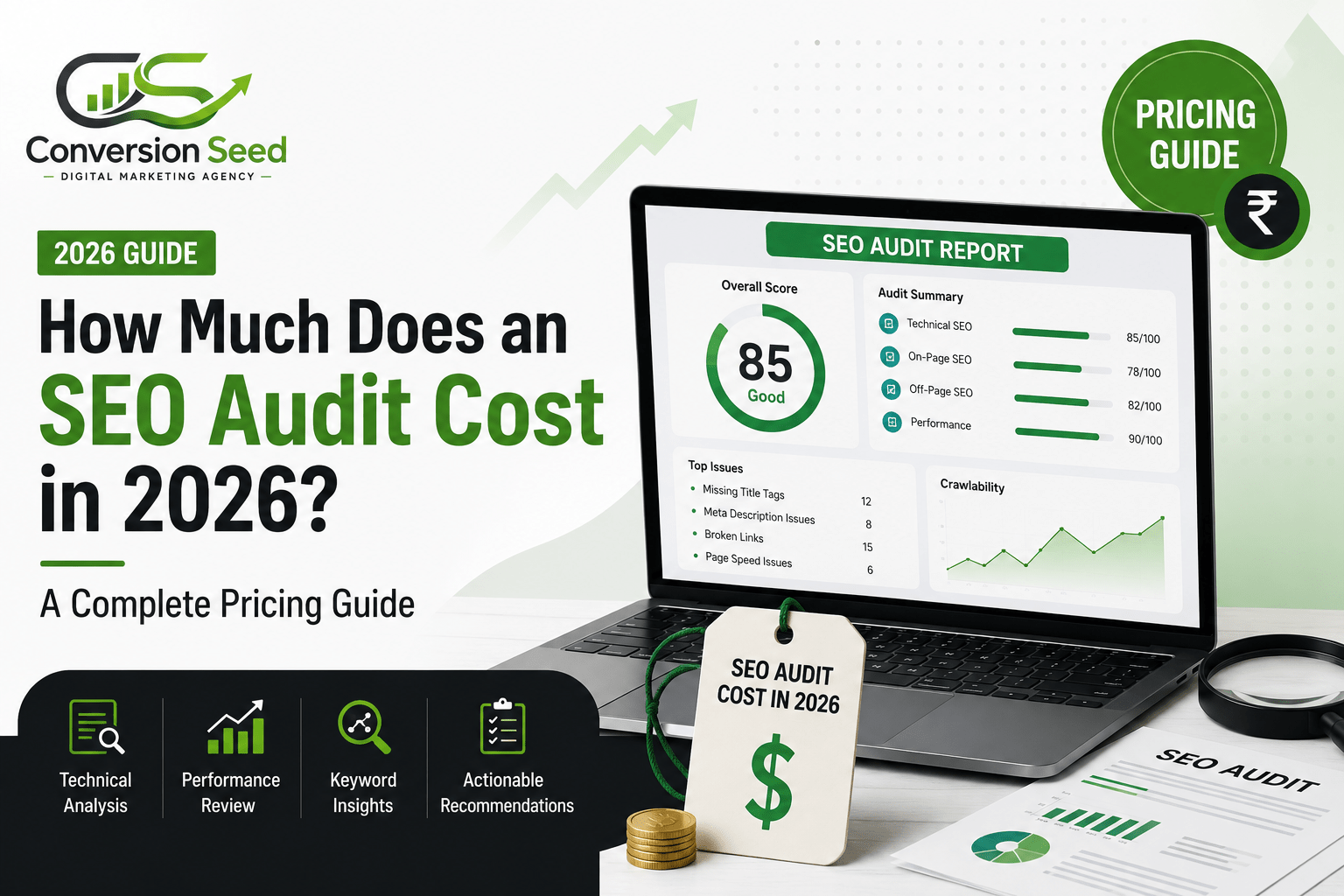
How Much Does an SEO Audit Cost in 2026?
SEO audit pricing varies depending on website size and complexity.
Here is the average SEO audit pricing in 2026:
| Website Type | Estimated SEO Audit Cost |
| Small business website | $200 – $500 |
| Local SEO audit | $200 – $500 |
| Medium business website | $500 – $1,000 |
| Ecommerce SEO audit | $1,000 – $2,000 |
| Enterprise SEO audit | $2,000 – $5,000+ |
Some freelancers may offer very cheap audits, but those are often automated reports generated using SEO tools.
Professional SEO audits usually involve:
The more detailed the audit, the higher the cost.
Several factors influence the cost of an SEO audit in 2026.
A small website with 10 pages is easier to audit than a large ecommerce website with thousands of product pages.
Larger websites require:
This increases the time and cost involved.
Highly competitive industries require deeper analysis.
For example:
These industries often need:
More competition usually means higher audit costs.
Websites built on advanced platforms or custom frameworks require deeper technical reviews.
Complex websites may include:
Technical audits for these websites take more expertise.
Ecommerce websites often have:
Because of this, ecommerce SEO audits are usually more expensive.
Businesses targeting local customers need specialized local SEO audits.
This includes:
Local SEO audits help businesses appear in local map results.
Different businesses require different types of SEO audits.
A technical SEO audit checks the technical health of your website.
It focuses on:
Technical issues can prevent Google from properly understanding your website.
A competitive SEO audit compares your website with competitors.
It helps identify:
This helps businesses understand how to outperform competitors.
Content is one of the biggest ranking factors in SEO.
A content audit reviews:
Good content improves rankings and conversions.
Google now values user experience heavily.
This audit reviews:
A good user experience can improve both rankings and sales.
This audit checks how search engines crawl and index your website.
It focuses on:
Poor indexation can prevent pages from appearing on Google.
Backlinks remain one of Google’s strongest ranking signals.
A backlink audit reviews:
Healthy backlinks improve website authority and rankings.
Social signals help improve brand visibility and trust.
This audit checks:
Strong social activity can indirectly support SEO growth.
AI-powered search is transforming SEO in 2026.
This audit evaluates:
Businesses now need content optimized for both users and AI-driven search experiences.
SEO ranking factors can be divided into three main categories:
Technical SEO ensures search engines can properly crawl and understand your website.
Important technical SEO factors include:
Google prefers secure HTTPS websites.
Fast-loading websites improve user experience and rankings.
Pages must be properly indexed to appear in search results.
Schema helps Google better understand website content.
Google measures loading performance, stability, and interactivity.
On-page SEO focuses on content and website optimization.
Important factors include:
High-quality, useful content performs better on Google.
Keywords should be naturally placed throughout content.
Titles and descriptions help improve click-through rates.
SEO-friendly URLs improve crawlability and usability.
Alt text helps search engines understand images.
Internal linking improves navigation and authority flow.
Off-page SEO helps build website authority.
Important off-page factors include:
Quality backlinks improve rankings and trust.
Local business citations improve local SEO visibility.
Positive reviews build credibility and local trust.
Influencer mentions can increase brand visibility.
Guest blogs help earn backlinks and authority.
Forum participation can generate traffic and awareness.
Social engagement helps strengthen brand signals.
Before starting an SEO audit, businesses usually need to provide some important information.
The SEO agency needs access to:
This helps analyze the full website structure.
Businesses should share their top competitors.
Competitor analysis helps identify:
Businesses should provide their main target keywords.
For example:
This helps agencies evaluate ranking performance.
Google Analytics helps SEO experts analyze:
This data is critical for SEO analysis.
Google Search Console provides:
It is one of the most important tools for SEO audits.
Many businesses choose cheap SEO audits to save money.
However, low-cost audits are often:
Professional SEO audits provide:
A professional audit helps businesses make real SEO improvements instead of simply generating reports.
When selecting an SEO audit provider, businesses should look for:
Avoid agencies that promise:
Good SEO takes time, strategy, and expertise.
SEO audits are one of the most important investments businesses can make in 2026.
As search engines become more advanced with AI-driven results and user experience signals, businesses need to ensure their websites are technically strong, content-rich, and fully optimized.
A professional SEO audit helps identify:
Whether you run a small local business or a large ecommerce website, regular SEO audits can help improve visibility, traffic, and long-term growth.
If you are looking for professional SEO audit services,Conversion Seed provides detailed SEO audits designed to help businesses improve rankings, traffic, and online performance in 2026 and beyond.
Elevate your online presence with Conversion Seed trusted Digital Matketing strategies and solutions.