Back in the day, searching on Google was pretty straightforward. You opened your browser, typed in a few keywords, and hoped for the best. Now, things are a whole lot smarter—and a lot more complex. Today, we’re diving into the evolution of Google’s search interface: how the new intelligent Search box stacks up against the classic search bar, what features have changed, and how these shifts impact your SEO and AI-powered marketing strategies.
Twenty-five years might seem like a blink when it comes to tech, but Google’s search interface has undergone a seismic transformation. Initially, it was just a blank box—type in your keywords, hit enter, and wait for the list of relevant pages. Simple, effective, and predictable.
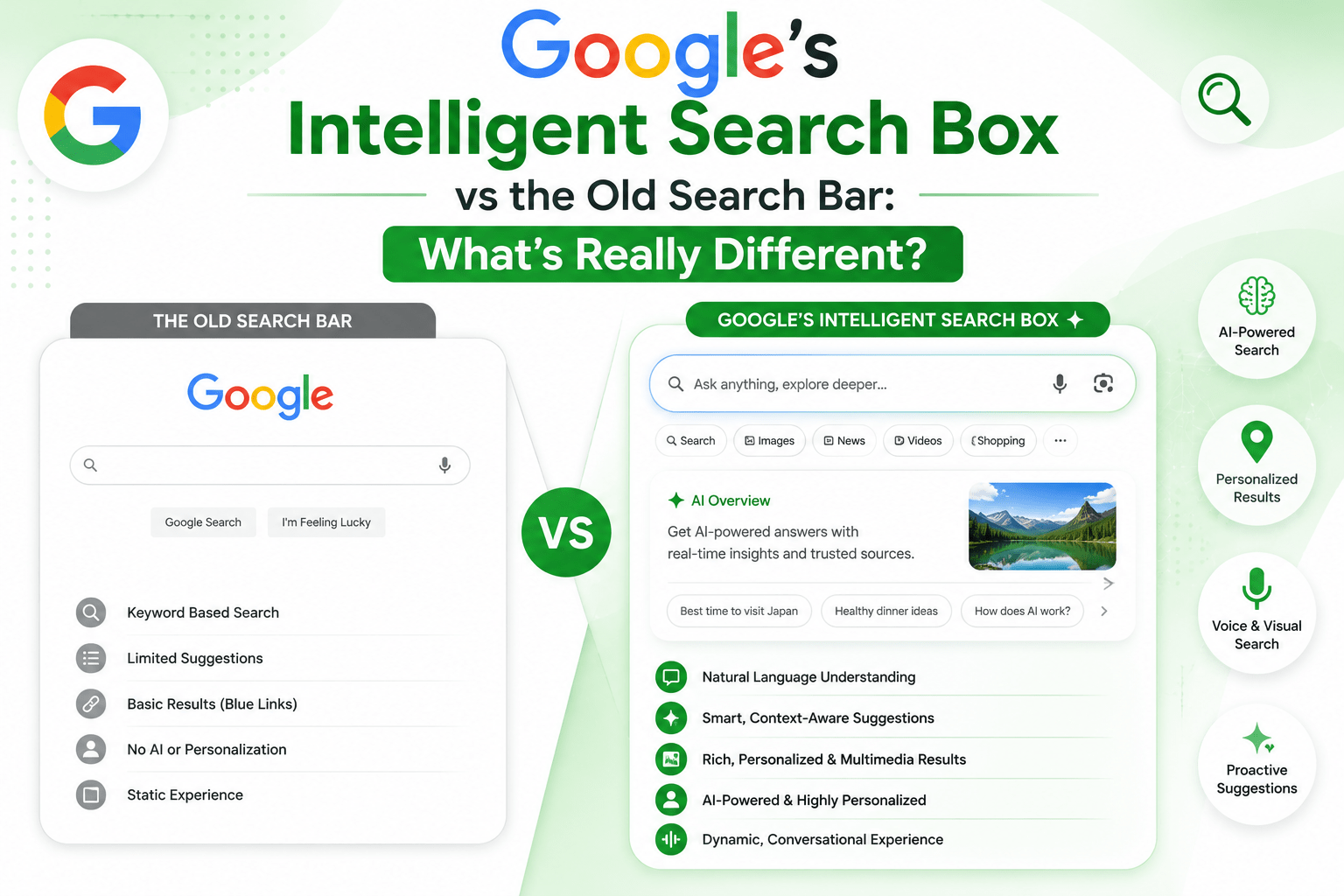
Fast forward to today, and the search box isn’t just a place to type; it acts as a gateway to an array of AI-driven features. Let’s compare these two eras side by side to see what’s changed—and how you can leverage these changes for your digital marketing agency or SEO services.
| Feature | Classic Search Box | Intelligent Search Box |
|---|---|---|
| Design & Interface | Simple and minimalistic search bar | Dynamic interface with AI suggestions, voice input, and interactive features |
| Autocomplete & Suggestions | Basic auto-fill from previous or popular searches | Context-aware suggestions, personalized recommendations, and live query updates |
| Query Understanding | Primarily keyword-based matching | Natural Language Understanding (NLU) with conversational search capabilities |
| Local & Personalization | Limited personalization from search history | Hyper-personalized results based on intent, behavior, and location |
| Results Presentation | Standard list of URLs with short descriptions | Rich snippets, AI answers, knowledge panels, multimedia, and interactive results |
| Support for Voice Search | Limited or unavailable | Fully integrated voice search and conversational interactions |
| Proactive Features | No proactive recommendations | AI-driven predictions, proactive suggestions, and Google Discover integration |
| Search Experience | Static and reactive | Intelligent, predictive, and user-intent focused |
| AI Integration | Minimal or none | Deep AI integration powered by advanced models like Gemini |
| User Interaction | One-time query-response model | Multi-step conversational and follow-up search experience |
1. Smarter Autocomplete & Suggestions
The old search box offered auto-complete suggestions drawn from popular or previous searches. Today, Google’s intelligent Search box goes beyond simple auto-fill. Thanks to AI and Machine Learning, it understands the context of your query, offering suggestions that are more relevant, personalized, and timely. Whether you’re searching for “best restaurants nearby” or asking a complex question like “How does quantum computing affect cryptography?”, Google’s predictive suggestions are tailored to your intent.
2. Natural Language Processing (NLP)
One of the biggest leaps is NLP integration. Classic search bars work well with keywords—“best running shoes” or “weather New York”. Now, users can speak naturally: “What’s the weather like in New York tomorrow?” or “Find me the latest tech news.” Google’s AI SEO services now utilize NLP to interpret these conversational phrases, delivering more accurate results.
3. Rich, Multimedia Results & Visual Features
While older search results were text-heavy, today’s search results page is bursting with multimedia. Knowledge panels, images, videos, and smart snippets help users find relevant info faster. For example, a search for “Eiffel Tower height” will display an instant answer box with a picture, height info, and historical facts—without clicking through multiple links.
4. Voice Search & Assistant Integration
The old search box rarely supported voice commands. Now, with smart speakers and voice-activated devices, Google’s intelligent search is often voice-first. This shift means optimizing SEO strategies for voice queries is more important than ever, especially for local search.
5. Personalization & Localized Results
The classic search bar delivered generic results with some personalization if you were logged in. Today, the results are intensely personalized—based on your location, device, search history, and even your preferences. For local businesses running a digital marketing agency or SEO services, this means local SEO efforts are more critical in capturing those geo-specific searches.
The evolution of Google’s search box isn’t just a cosmetic upgrade; it fundamentally shifts how we approach SEO and AI SEO services.
1. Focus on Voice Search Optimization
With voice search prevalent, optimizing for conversational keywords and natural language queries becomes vital. Incorporate long-tail keywords and question-based phrases in your content to match what users are asking verbally.
2. Emphasize Featured Snippets & Rich Results
Optimizing for rich snippets can boost your visibility in the new search experience. Structured data markup (schema.org) helps Google present your content as featured snippets, quick answers, or knowledge panels.
3. Prioritize Mobile & Local SEO
Given the personalized and localized nature of results, ensure your business appears in local searches. Claim and optimize Google My Business profiles, especially as local queries grow with voice search.
4. Leverage AI & Machine Learning Tools
In the realm of AI SEO, using advanced tools that analyze user intent and suggest keyword opportunities can help your website stay ahead of the curve. Many digital marketing agencies now incorporate AI-powered SEO services to better match evolving search behaviors.
5. Create Content That Answers Questions
Focus on creating comprehensive, question-based content. Google’s NLP capabilities prefer content that clearly addresses user intent and provides value quickly—think FAQs, how-tos, and detailed guides.
Over the past 25 years, Google’s search box has evolved from a basic input field to an intelligent, conversational assistant that understands context, intent, and personalized preferences. For digital marketing agencies and businesses leveraging SEO, this shift demands a more nuanced, user-centric approach.
Staying ahead means embracing these changes—investing in AI SEO services, optimizing for voice and local search, and creating content that aligns with how users now seek information. As Google continues to refine its search capabilities, those who adapt quickly will reap the benefits of higher visibility and better engagement.
In a digital landscape driven by AI and smarter interfaces, the question isn’t just about how people search—it’s about how you can harness that knowledge to connect smarter, faster, and more effectively with your audience.
Ready to optimize your strategies for the new era of search? Contact your trusted Digital Marketing Agency today and explore how our AI SEO services can give your business a competitive edge!**
Elevate your online presence with Conversion Seed trusted Digital Matketing strategies and solutions.